Mental Health has been the ongoing and upcoming subject in today’s globalized society. To primarily speak about mental health and various policies, socio-legal updates surrounding it, firstly we must get adept with what mental health is. Mental health refers to a person’s overall state of well-being that enables them to effectively manage the ordinary pressures of daily life.
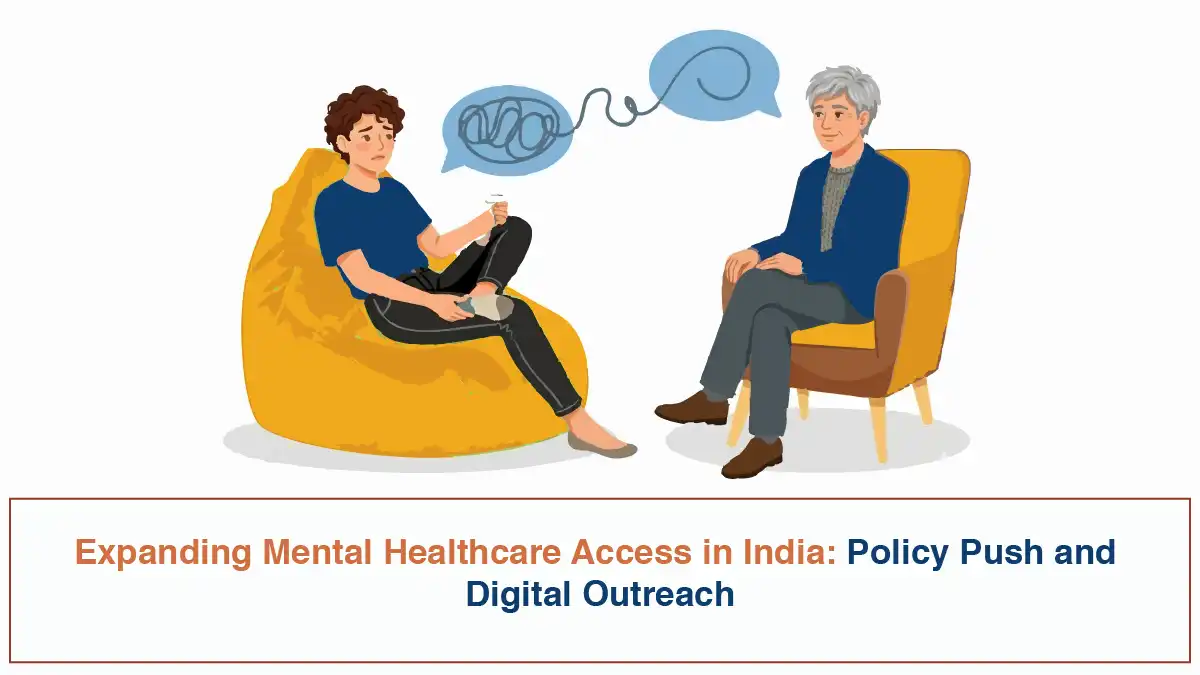
Therefore, there has been a larger policy push and digital outreach regarding the mental healthcare across India to improve the accessibility, affordability of people with problems to their mental health and mental wellbeing. On this note, famous psychologists have determined that “Mental well-being refers to an individual’s capacity to adapt and respond effectively to challenging life situations, changing responsibilities, and varying social roles. It involves maintaining a balanced and harmonious connection between the body and the mind across different stages of life.”
As such, in the Union Budget of 2026-27, the Government of India has reaffirmed its commitment towards making sure every Indian citizen has the resources and access towards trauma care and mental wellbeing. Some of the actions that were proposed to be taken by the government are the expansion of national institutes in northern india on the lines of NIMHANS, situated in Bangalore.
Another milestone proposed and to be executed by the Government of India is to upgrade the National Mental Health Institutes in Ranchi and Tezpur as Regional Apex Institutions. Along with this, the Government has also proposed establishing Emergency Trauma Care Centre’s across all the district hospitals, and it affirms to implement the same nationwide.
This action could be helpful for every Indian citizen in India to approach and claim the services whenever there could be an emergency as these hospitals will be established to provide a 24*7 services. It is also a noteworthy fact that more than 1.75 lakh Sub Health Centre’s (SHCs) and Primary Health Centre’s (PHCs) across the country have been transformed into Ayushman Arogya Mandirs, integrating mental health services within the framework of Comprehensive Primary Health Care.
In addition, the Ayushman Bharat Pradhan Mantri Jan Arogya Yojana (PM-JAY) extends coverage to various mental health conditions, including intellectual disabilities, schizophrenia, and autism spectrum disorders, among others. The scheme also provides cashless treatment facilities for 22 identified mental health procedures, thereby improving accessibility and affordability of mental healthcare services in India.
The Union Budget 2026–27 marks a significant step forward in strengthening India’s mental healthcare framework. It reflects the government’s continued commitment to developing a more inclusive, accessible, and equitable mental health system across the country. The announcement regarding the establishment of NIMHANS-2 in North India, along with the upgradation of major institutions in Ranchi and Tezpur, seeks to address important regional disparities while enhancing specialised infrastructure, professional training, and trauma care facilities.
These focused initiatives further build upon the foundation laid through earlier mental health reforms and policies. Taken together, they demonstrate a sustained effort towards reducing social stigma, narrowing treatment gaps, and recognising mental well-being as a crucial component of national development, youth empowerment, and inclusive economic growth. Effective implementation and consistent monitoring of these measures will remain essential to ensuring meaningful and lasting benefits for people across the country.
Written by Adv. K. Sri Hamsa