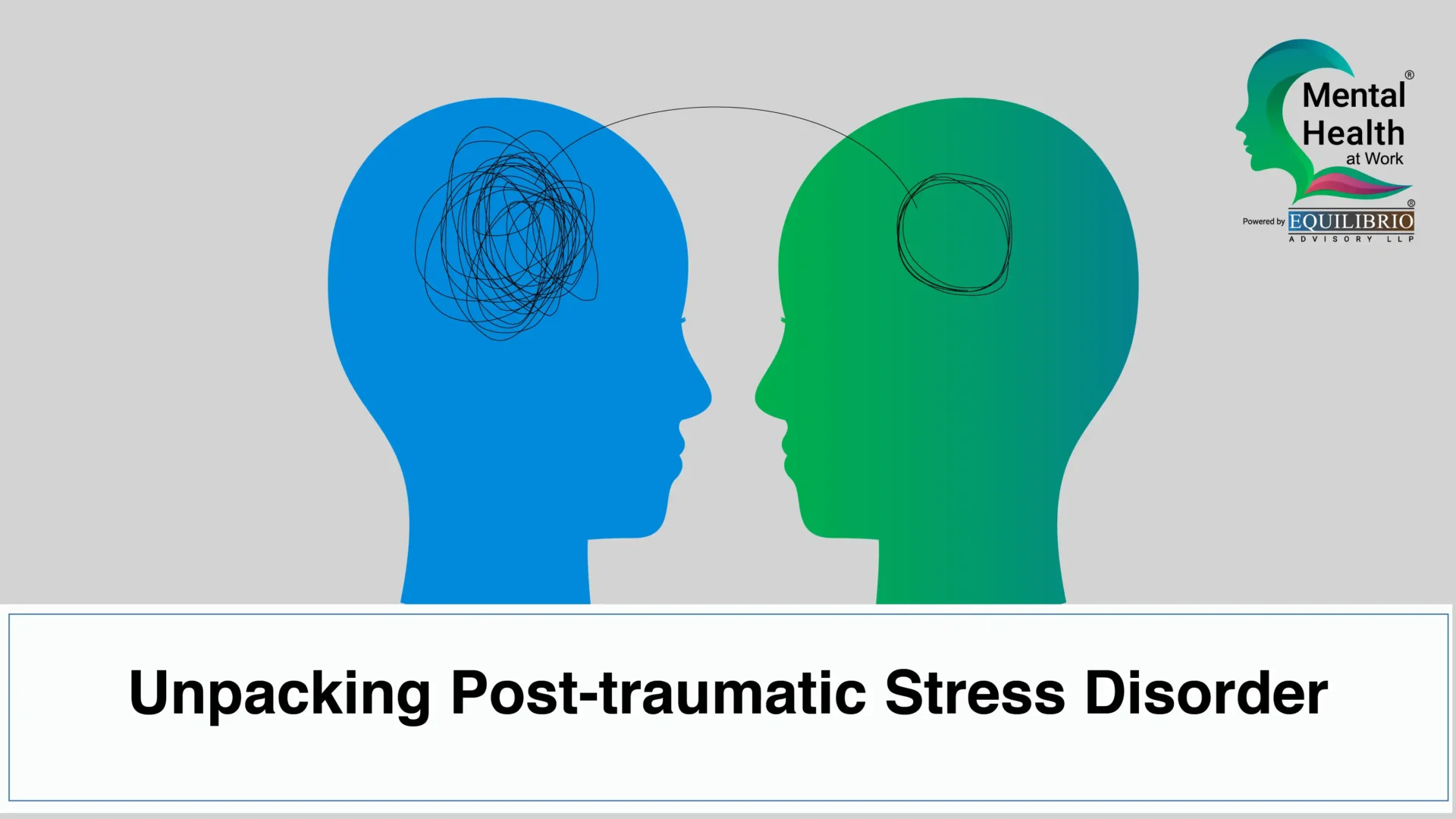
What is PTSD?
Post Traumatic Stress Disorder (PTSD) is a mental health concern that can develop after witnessing or experiencing a traumatic event. However, the experience of trauma is complex and unique for everyone.
So, exposure to a traumatic event doesn’t necessitate PTSD. Often after the experience of ‘traumatic events’ it has been noticed that some people can return to their normal pace of life. While for others this event can cause a lasting impact and rewire how their brain thinks, navigates through interpersonal dynamics and perceives the world.
What Causes PTSD?
Before we delve into the nuances of PTSD, let’s look at what the word ‘trauma’ really means. SAMHSA (Substance Abuse and Mental Health Services Administration) defines trauma as, “Individual trauma results from an event, series of events, or set of circumstances that is experienced by an individual as physically or emotionally harmful or threatening and that has lasting adverse effects on the individual’s functioning and physical, social, emotional or spiritual well-being.”
Studies have shown that the experience of trauma can reshape our brain’s neural chemistry. The limbic part of our brain also considered the “emotional brain”, presides over regulation of emotions, impulses, memory, planning and cognitive. The experience of trauma affects these pathways and impacts our impulses, emotions, memory and behaviour.
Through millennia of evolution, the limbic system of our brain has adapted to respond to any threatening situation through a fight-flight-or-freeze reflex. When we find ourselves in a dangerous situation, our limbic system instructs our body to release adrenaline which speeds up our survival functions like oxygen flow to muscles and increased heart rate. Given our environment and resources, we learn to either freeze or fight or flee, during the experience of trauma.
Usually, this stress response returns to normal once we are out of this dangerous situation. However, with PTSD, the biological stress system is dysregulated, and hence, they cannot return to normal. As a result, they often feel unsafe long after the threat is gone. PTSD was first studied in the context of veterans who have experienced war, but the definition was gradually expanded to follow many kinds of trauma to people of any gender or age.
That said, certain factors like the severity of the trauma, the individual’s support systems, their genetic history of neurodivergence and any previous exposure to trauma all contribute to the likelihood of developing PTSD.
Traumatic Events That Can Cause PTSD
The understanding of what constitutes a ‘traumatic event’ has also evolved over the year. Initially, the impact of PTSD was noticed after the World War I, where the expression of “shell-shock” was noticed in soldiers returning from the frontline. Over the decades, however, as the understanding of what constitutes trauma evolved, so did the understanding of the event or events that can cause it.
Any incident, big or small, can cause trauma if the experience of it arouses severe fear, distress, helplessness and a feeling of threat to a person’s chances of survival. Mental health practitioners have come to agree, that the event does not need to be dramatic and substantial, rather it is about the impact it leaves on a person.
With this widened understanding, the list of traumatic events that can trigger PTSD can include but is not limited to the following:
- Accident or serious injury
- Physical or sexual assault
- Prolonged emotional or physical abuse
- Witnessing violence on another
- Natural disasters like earthquakes or cyclones
- Actual or threatened death of a loved one
- Medical trauma like life-threatening surgery
- Systemic injustices like racism, sexism, casteism, queerphobia, transphobia, ableism etc.
- Poverty, displacement, experience of geo-political conflict
PTSD can be caused by a singular event like an accident or repeated exposure to stress like in domestic abuse. Each person responds differently to different events, and what may be stressful for one may not be the same for another.
Additionally, trauma is not clear-cut, direct or linear. Hearing or witnessing a loved one’s traumatic experiences or repeatedly being exposed to such details through your occupation can also lead to PTSD. This is called vicarious trauma. It is well-documented in health-care workers and first responders.
Systemic inequities, like the marginalization of persons based on race, gender, caste, religion, sexuality, ability, ethnicity, region, can lead to PTSD. Experience discrimination and lack of resources over a prolonged period of time has been noticed to deeply affect a person’s sense of safety in the world.
PTSD Symptoms
PTSD symptoms can be separated into 4 categories according to the Diagnostic and Statistical Manual of Mental Disorders (DSM-5).
Intrusion
These could include recurrent memories, dreams or flashbacks related to the trauma. One could experience psychological or physiological distress from cues that remind them of the event.
Avoidance
A person may avoid any people, places, objects or situations that arouse memories of what happened. They might choose not to think or talk about the event and their feelings.
Negative changes in mood and thinking
This can look like persistent pessimism, hopelessness, anger, fear, blame or guilt. The person might experience amnesia related to the event and find it difficult to experience positive emotions. Some people also tend to lose interest in activities they enjoyed and detach from the people close to them.
Changes in reactivity
A big impact of trauma is the limbic system of the brain gets tripped to being in a state of hyper-arousal. This can lead to changes in physical and emotional reactions, like being easily startled, frequent outbursts or engaging in self-destructive behaviour. This also includes having difficulty concentrating or sleeping through the night. The person might feel constantly on-guard or hypervigilant.
Symptoms usually begin within the first 3 months after the trauma, but it may surface years later. The experience is trauma is not linear, however for its impact to be substantial these symptoms must persist for over a month and disrupt their ability to function in their day-to-day life.
What Does a PTSD Episode Look Like?
A PTSD episode can occur when something transports you back to the traumatic event. This can happen because internal triggers like an emotion or a thought, or because of external triggers like a place or a smell or a loud noise.
The person may experience dissociative states where they feel disconnected from their current surroundings and even from the physical sensations of their own body that can go from a few seconds to hours and, in rare cases, even days where the event is relived and the person acts as though it is occurring. This can be just in the form of sensory intrusions, or it can even be as severe as a complete detachment from your surroundings and reality. These episodes are called flashbacks.
An episode might look different for everyone but it involves a sudden and strong change in one’s awareness or mood. It could be characterised by flashbacks or emotional outbursts or physiological reactions like shaking or difficulty breathing. For others, the person could be distant and unresponsive or exhibit extreme panic. They could even startle or yell or cry. Once the episode passes, it is normal for them to feel exhausted or disoriented.
If you are with somebody showing symptoms of a PTSD episode, speak slowly and avoid loud noises or sudden touch. Encourage slow breathing and be calm and reassuring. It can be helpful to remind the person where they are and that they are safe.
PTSD Symptoms in Adults vs Children
PTSD can look very different depending on age.
For adults, PTSD shows up through irritability, avoidance and detachment. They find it difficult to concentrate on their work and express negative emotions like anger, fear or hopelessness. Some turn to alcohol or substances to cope.
Children also show a lot of the same symptoms like flashbacks or intrusive dreams, avoidance of stimuli and negative changes to their mood and reactions. However, for children, it is more difficult to recognise symptoms since they might not have the words to express how they are feeling or what they are experiencing. Hence, they might appear through behaviour changes. Reenactment of trauma-related events can show up in play.
They might have nightmares without remembering what happened in them. Other common symptoms could include bedwetting, emotional dependence and being afraid of separation from a parental figure. Teenagers, however, might show symptoms closer to that of an adult. They could be more irritable or engage in risky behaviour and their school performance might drop.
Since children exhibit trauma in different ways, the parents and caregivers are crucial in spotting changes and taking necessary steps to get a clear diagnosis and necessary therapeutic support.
PTSD and the Workplace
PTSD is not just momentary state, its effects follow a person into their day-to-day life, impairing a person’s personal, social and occupational functioning.
A professional struggling with PTSD might face difficulties with their memory or concentration. They could seem distracted, jumpy, irritable or on edge. Loud noises, sudden movements, or high-pressure situations could make them uncomfortable in a way it did not before. There might be an increase in absences in case the PTSD is unrecognized and its symptoms eventually can lead to emotional overwhelm.
Aside from that, their workplace relationships might also be impacted. They might seem more withdrawn or display extreme trust issues. Superficially, these changes can often be misread as a bad attitude but require a deeper understanding of mental health and trauma.
Certain jobs that involve exposure to danger and others’ trauma can carry higher risks. Fields like healthcare, emergency services, law enforcement, etc. can not only contribute but also worsen PTSD. That said, any high stress or high-pressure workplace can often become a trigger for someone with PTSD.
If the employee is surrounded by a supportive workplace culture that understands how trauma impacts the brain, they would be more likely to seek help and regain their sense of safety.
What Employers and HR Professionals Should Know
Managers and HR Teams can be integral to recognising signs of changes in an employee’s behaviour. Since trauma pierces through a person’s sense of safety, if their work environment doesn’t centre psychological safety, their morale and productivity can be deeply affected. To prevent this, the workplace can bring in initiatives that prioritize the overall wellbeing of the employee.
In situations like these, an Employee Assistance Program (EAP) becomes a valuable tool. An EAP gives employees access to a professional, confidential counselling space and referral services. Removing the stigmas around EAPs and promoting awareness about it can encourage employees to reach out when they need help.
Making accommodations such as a quieter workspace or allowing flexible schedules during difficult times can be greatly helpful when working with someone with PTSD. HR teams can also consider mental health check-ins and protective policies that can make people feel more comfortable disclosing mental health concerns. For work fields, which are more likely to incur PTSD, there might be accommodations of regular breaks from the field. This allows the professional a chance to bring their nervous system back to a healthy baseline.
In the event of a person disclosing their mental health concern, confidentiality is of utmost importance and the matter should be handled with care and discretion.
How to Support Someone With PTSD
Supporting someone with PTSD can be difficult when you do not know how to help them. The most important thing is to handle any situation with patience and empathy. Recovery is always difficult and often not linear. Avoid putting any pressure on them to talk about the traumatic event. Revisiting distressing memories before they’re ready can often do more harm than good. Conversely if someone is having intrusive flashbacks, provide emotional support. Allow them space to verbalize their feelings.
Be curious an learn their triggers and try to create a safer environment around them. Having a steady life with consistent routines can be a major source of safety from someone recovering from trauma. It can be helpful to encourage professional help. A trained therapist brings in therapeutic tools and a space of non-judgement and empathy that can help in ways that loved ones may occasionally fail to provide. And most importantly, remember to also take care of yourself. It can be exhausting or demanding to support someone through PTSD; so be sure to check in with yourself and seek professional help for your own self, if necessary.
PTSD in India: The Conversation We Need to Have
In India, mental health has always been a topic of stigma and taboo. However, with better awareness, the conversation has slowly been opening up. That said, the glaring lack of education about mental health hygiene is still cause for concern. PTSD remains widely misunderstood as something only soldiers or survivors of “big events” experience and is often dismissed as “stress” in other situations.
On the other hand, survivors of abuse, natural disasters or accidents do not get the support they need, for fear of being labelled as “unstable” or “crazy”. Most households still consider mental health struggles to be shameful, keeping it private even from close family. This can be dangerous. PTSD episodes can happen suddenly, triggered by a loud sound or smell. If one’s friends and family aren’t aware of their condition, an already overwhelming moment could be made worse by well-intentioned but unhelpful reactions like panic or unsolicited questions, touch.
Or it can be more internal with a person slowly withdrawing from life, with their sleep and appetite being affected. Family members may often misinterpret this as a bad lifestyle and laziness. Judgement from their own family and peers can push those already struggling with PTSD, deeper into burrows of anxiety, shame and guilt.
Another issue is access to trauma-informed care. Therapists who have been trained in mental health care that accounts for how trauma shows up, are spread unevenly across the country. It can often be challenging to find therapeutic help outside of major cities. Online mental health services can be a great option, accessible to those seeking help. Equilibrio Advisory’s Mental Health at Work operates at the intersections of trauma, marginalization, affirmation and can be availed virtually.
Change is happening, although slowly. More workplaces identify PTSD as an independent mental health concern and more people are speaking out about their experiences. PTSD is a mental health concern which needs awareness, support and therapeutic intervention, just as physical ailments require treatment and recovery. When people around a survivor understand what they are dealing with, it makes the experience of PTSD far less isolating.
Written By Samaira Kumaran (Supported by Usri Basistha)