Employees often say they want managers who listen, yet leading with empathy can be hard when targets are tight and your own plate is full. This short read looks at the challenges that come up in the way of empathetic leadership at work and at practical ways to move forward.
Why leaders matter for workplace stress
With Work-life balance being highlighted as a source of stress at work, ahead of even Career Advancement and Workplace Relationships by all of those who engaged with our survey, it got us wondering:
Can we as leaders contribute towards supporting that work-life balance that our employees value?
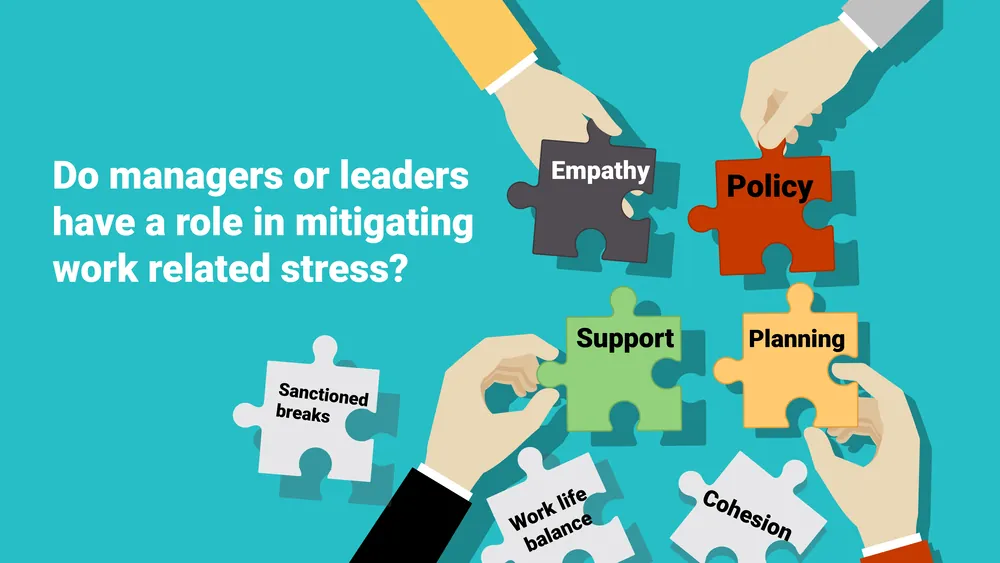
Can managers or leaders play a role in mitigating work related stress?
We, at Equilibrio Advisory LLP, strongly believe that the management techniques, perspectives and policies adopted by workplace leaders and decision makers have the ability to influence the experience of each employee at the workplace.
Empathetic, inclusive engagement with the team,
regular connects,
a flexible approach,
planning and preparation while pre-empting crisis can go a long way towards building cohesion, pathways to access support and creating a space where employees feel valued as whole individuals with an existence even outside their role at the #workplace.
Through open non-judgemental #dialogue, it is possible to find solutions that can be to the benefit of both the organisation and the employee.
Most importantly, to develop the ability and skill required to:
– Walk the talk and promote self-care and balance through action
– Be vulnerable ourselves &
– Identify the signs of stress, and to be able to respond in our capacity as managers or refer the individual to a professional for support
Remember you too, as managers, leaders and decision makers are not alone in your journey, and it’s okay to feel all that you are feeling.
Common challenges for empathetic leadership
- Time pressure. Check-ins feel like a luxury when deadlines are close.
- Fear of overstepping. Many managers worry about asking personal questions or saying the wrong thing.
- Limited training. Spotting signs of stress and having supportive conversations are skills that need practice.
- Leaders’ own stress. It is difficult to support others when you have no support yourself.
- Results-only culture. If only outputs are rewarded, people hide struggles.
What managers can do
- Hold regular one-to-one conversations that include how the person is doing, not only task updates.
- Listen first, without rushing to fix, and ask what would help.
- Stay flexible where possible, for example with timing, deadlines or workload.
- Learn the signs of stress and know where to refer someone, such as an employee assistance programme or a qualified counsellor.
- Model healthy habits, such as taking breaks and respecting time off.
Frequently asked questions
What is empathetic leadership?
It is a style of leading where managers try to understand how people experience their work, respond with care and still keep clear expectations. Empathy and accountability can go together.
Can managers help reduce work-related stress?
Yes. Realistic planning, open dialogue, flexibility and timely support can lower avoidable stress, and managers can point team members towards professional help when needed.
This post is for general awareness and does not replace advice from a qualified professional.