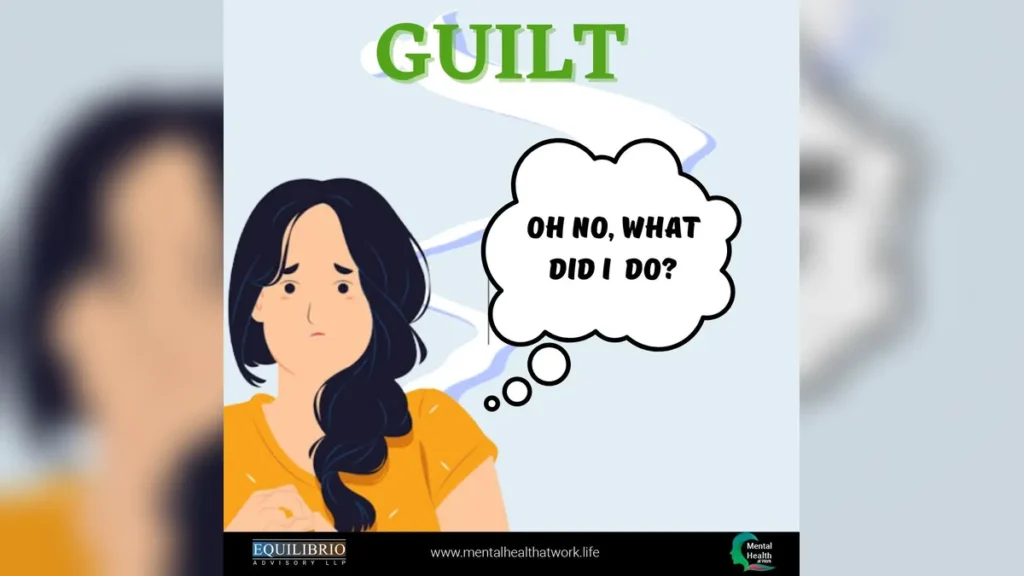
Guilt is the uncomfortable feeling that we have done something wrong or failed to do something we should have. It can be useful, but only when it leads to understanding and repair.
About guilt
Individuals may experience guilt after doing something they perceive to be “wrong”, whether on purpose or by accident causing harm, disappointment, rejection to another person. It may occur in those circumstances wherein a person feels that they did not do something they should have done or did not do “enough” and even upon identifying thoughts that they believe are “wrong” or “bad”. Usually, one’s own moral code and/or societal norms are the basis for a person’s sense of guilt. Guilt’s impact is usually unpleasant, and could include grief, sorrow, as well as bodily discomfort. However, this discomfort and unease might inspire change, such as by way of apology or through a resolve to make different decisions or choices in the future. However, when a person is overburdened by guilt, the intensity of the emotion may lead to unpleasant bodily symptoms as well as self-doubt, low self-esteem, grief, and humiliation.
Overcoming these emotions can be challenging, especially in the case of persistent guilt. When a mistake can’t be undone, guilt might linger until there is an opportunity to make things right. Sometimes people may experience guilt so acutely, that it makes it impossible to get through the day. They may find it difficult to connect with loved ones, maintain relationships, or focus at work.
Selfcompassion can help with overcoming guilt. A few other steps that may be supportive in responding to the feeling of guilt could include:,
- Taking a pause and identifying the source of guilt / the values you hold dear that may be at the core of the guilt
- Take the time to come to terms with the incident and your emotions. Accept your emotions and recognize that this could be challenging, and a work in progress.
- Consider how you can immediately look after yourself. Can you notice, a few things that you did well during the incident? Spaces where you were able to access insight and support?
- Consider how you would handle a friend going through a similar situation. Do you have any advice for that friend? Try saying the same things to yourself.
- Offer acceptance, love, and compassion to yourself and the situation in a letter or journal entry.
- Be mindful of your self-talk. Pause, if it is overly critical and negative. Instead of reminding yourself of your mistake and how unpleasant it was, simply admit you made a mistake and know that you’ll do better next time. Remind yourself of the lessons you’ve learned or the ways in which you’ve improved because of the decision you made.
- Reach out for therapeutic support.
Remember, it’s okay to feel what you are feeling. You are not alone. It is okay to reach out for support. You got this!
How guilt can show up at work
At work, guilt may follow a missed deadline, a mistake that affected a colleague or taking leave when the team is busy. Carrying guilt for too long can lead to overworking, avoiding people or harsh self-criticism.
Healthy ways to respond
- Ask whether the guilt fits what actually happened.
- If you caused harm, acknowledge it and make amends where you can.
- Learn what you would do differently, then let the guilt ease.
- Be kind to yourself, since guilt that never lifts is not helpful.
Questions to reflect on
- What is my guilt trying to tell me?
- What would repair or learning look like here?
Frequently asked questions
What is the difference between guilt and shame?
Guilt focuses on what you did, while shame focuses on who you are. Guilt can motivate repair, whereas shame often leads to hiding.
Is it normal to feel guilty about rest or leave?
It is common, particularly in busy workplaces, but rest is a normal need and part of sustainable work.
This post is for general awareness and does not replace advice from a qualified professional.