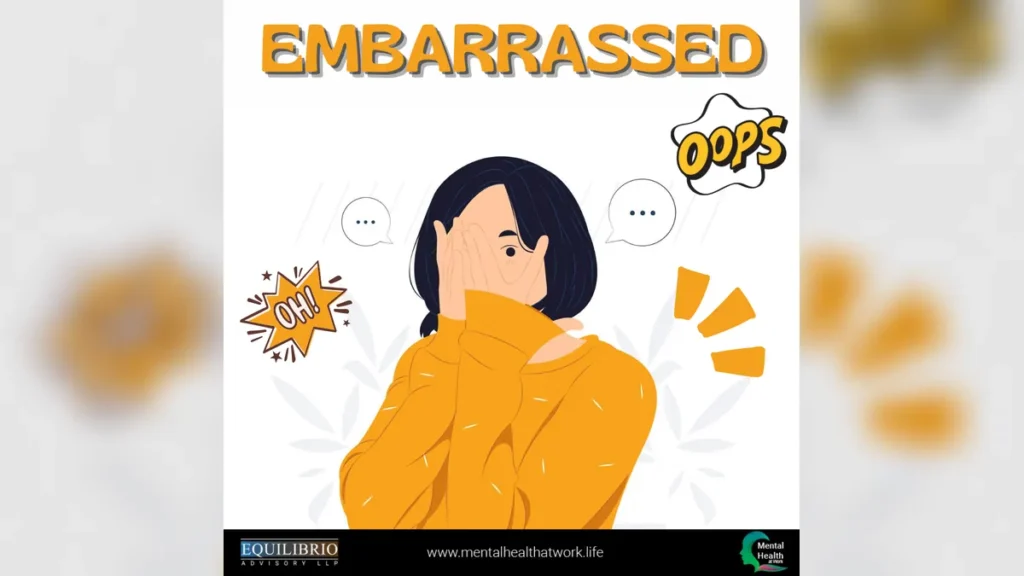
We have all had a moment when we wished the floor would swallow us. Embarrassment is a common, social emotion. Knowing how it works helps us get through it with less pain.
About embarrassment
Embarrassment can be a painful emotion people experience when they receive unwanted attention and feels awkward, in a challenging social situation that is not in their control, or when perceived inadequacies become apparent to others. Unlike shame, the reason or core of the emotion may not be a sense of morality and could be more derivative of the surrounding social environment, arising from how we value other’s perception of us.
People can experience embarrassment in awkward situations as well, for example when people catch someone staring at them constantly. Embarrassment can occur during traditionally sought out ‘positive’ situations as well, for example, when a person who is uncomfortable with attention is getting praised in front of a huge crowd. Embarrassment is a highly individual experience and is often intensified by the fear that everyone is watching (and judging) when most of the time, almost no one may be paying the same amount of attention to the incident as one perceives it.
Embarrassment is sometimes regarded as a less severe negative feeling, and some people may yet purposefully put others in embarrassing situations for their own entertainment. When someone is embarrassed, they tend to feel self-conscious, flush, smile, and alternate between looking away and back. They also frequently don’t know what to do with their hands and bodies.
Even though embarrassment is a feeling we don’t want to feel, it is okay to experience it sometimes and it does not define you. It is important for people to deal with these situations to not be overwhelmed by the feeling of embarrassment:
Here are a few strategies that can help with coping with embarrassment.
- Can you challenge yourself to find the humor in the situation? It can be helpful to laugh at one’s own mistakes.
- Practice self-compassion, and pay attention to the negative self-talk. Treat oneself with kindness.
- Be present-minded. Bring yourselves back into the present moment after calming down. Know that the embarrassing situation is past and explore meaning in where you are in the moment.
- Reach out for support if you need to
How embarrassment can show up at work
At work, embarrassment may follow a mistake in a meeting, a forgotten name or an unexpected comment about you. The feeling usually peaks quickly, and most colleagues forget the moment faster than we do.
Healthy ways to respond
- Take a slow breath and let the first wave of the feeling pass.
- Acknowledge it simply, with a smile or a short comment, if that suits you.
- Remind yourself that mistakes are common and usually temporary.
- Talk it through with a trusted friend and notice how small it may feel afterwards.
Questions to reflect on
- What helps me recover after an awkward moment?
- How would I respond if a friend had the same experience?
Frequently asked questions
What is the difference between embarrassment and shame?
Embarrassment is linked to social awkwardness and usually passes. Shame is a deeper feeling that something is wrong with who we are.
Why does embarrassment feel so intense?
We are social beings, so being seen in an unflattering way can feel threatening even when the consequences are small.
This post is for general awareness and does not replace advice from a qualified professional.