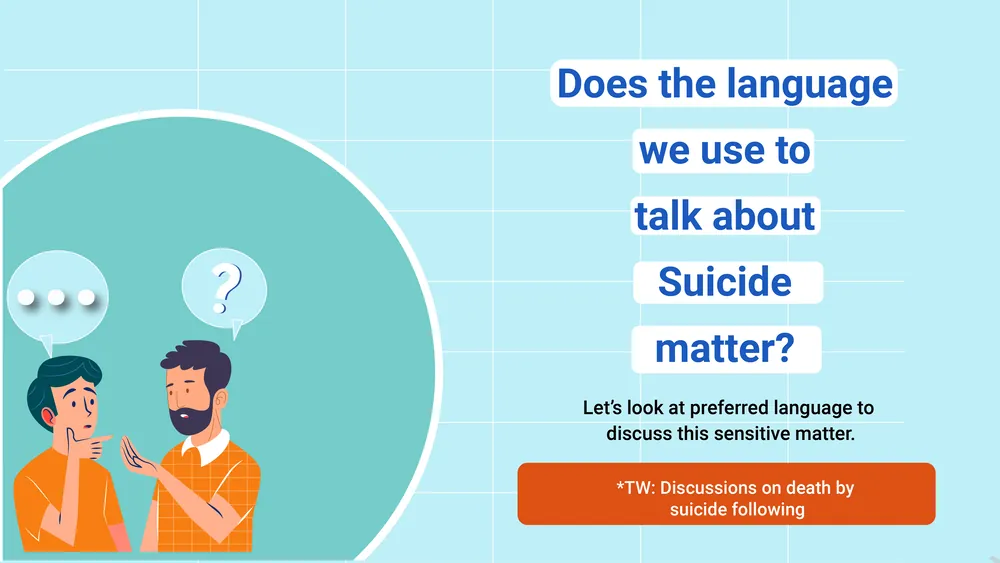
Does the language we use to talk about suicide matter? Yes. Words carry attitudes, history and stigma, and the way we talk about suicide at work, at home and in the media can either invite people to seek help or push them into silence. This guide explains why language matters and offers simple, compassionate alternatives.
Why the language we use to talk about suicide matters
Language has power, and words may convey deep meaning to a listener, beyond what we may have thought of, reflecting our attitudes, perspectives, and that of others as well as a shared history. Moreover, language has the capacity to reinforce stigma associated with certain social issues, even without meaning to consciously perpetuate the same. Thus, the language we use may also shape others’ attitudes and perspectives on certain issues. Therefore, we need to make a conscious effort to shift the language used while talking about suicide.
It is important to hold on to empathy and compassion when talking about this issue, especially to the bereaved, to a survivor, or even when talking about the person who has died by suicide. Remember, it is a step taken in response to deep hopelessness and despair.
Common phrases and kinder alternatives
When we think about the language we use to talk about suicide, the goal is not to police every word. It is to choose words that keep the door open for someone who may be struggling.
Some everyday phrases, often used without any ill intent, can sound judgemental or frame suicide as a crime, a failure or a choice made lightly. Try these alternatives:
- Instead of “committed suicide”, say “died by suicide”. The word “committed” echoes a time when suicide was treated as a crime.
- Instead of “successful” or “failed” attempt, say “died by suicide” or “survived a suicide attempt”.
- Instead of “attention seeking”, say “reaching out for help” or “in distress”.
- Instead of jokes such as “I could just kill myself”, name the real feeling, for example “I am overwhelmed”.
Talking to someone who is bereaved or a survivor
People who have lost someone to suicide, and those who have survived their own attempt, often carry grief, guilt and fear of being judged. Helpful responses include listening without asking for explanations, using the name of the person who died, avoiding blame and saying simply, “I am so sorry, I am here for you.” Remember that suicide is a response to deep hopelessness and despair, not a weakness of character.
Why the language we use to talk about suicide matters at work
Colleagues may be carrying private experiences of loss or distress. Teams that think about the language we use to talk about suicide, share information on where to find support and respond to disclosures with kindness make it more likely that someone will speak up early. Managers can include this topic in training, and organisations can share helplines in staff communications. For more on this subject, see our suicide prevention and loss support posts and the World Health Organization fact sheet on suicide.
If you or someone you know needs support
If you are in distress, or worried about someone else, please reach out to a qualified mental health professional or your local emergency services. In India, Tele-MANAS offers free mental health support on 14416.
Frequently asked questions
Is it okay to say “died by suicide”?
Yes. It is a factual, non-judgemental phrase that is widely recommended by mental health organisations.
Will talking about suicide put the idea into someone’s head?
No. Asking caringly and openly about suicide does not cause it, and often brings relief to a person who feels alone.
What should I avoid saying to someone who is struggling?
Avoid minimising (“it could be worse”), blaming or quick fixes. Listen, take them seriously and help them find professional support.
This post is for general awareness and does not replace advice from a qualified professional.