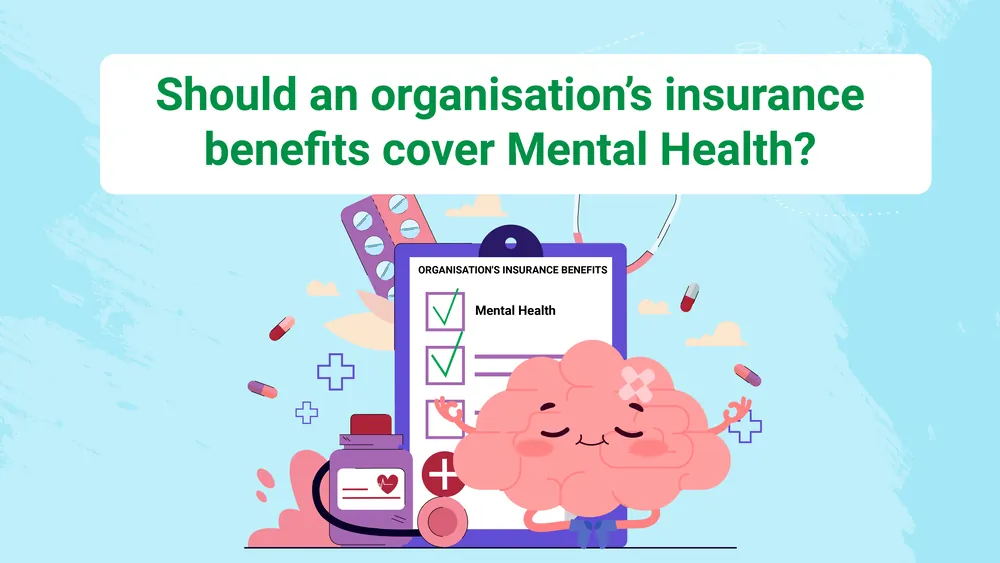
Should an organisation’s insurance benefits include mental health cover? In India the answer is increasingly built into the law. This post explains what mental health insurance cover means for employees, why it matters for employers and what leaders can do to make these benefits real and easy to use.
About mental health insurance cover at work
Mental health needs and concerns have come under the spotlight, particularly after the pandemic, a period which showed us all just how important it is to invest in strengthening mental health support structures and channels of access and awareness. The impact of these not being in place can be immense, especially in crisis situations.
In light of the Insurance Regulatory and Development Authority of India (IRDAI) directive for insurance companies to provide cover for mental illness under health insurance policies before 31 October 2022, in accordance with the Mental Healthcare Act 2017, it falls to leaders and decision makers at the workplace to revisit their structures, policies and approach to employee benefits. It is important to look at mental illness insurance coverage and ensure that each employee is aware of their rights regarding availing of these benefits.
What the law says about mental health insurance cover
The Mental Healthcare Act 2017 states that insurers must provide medical insurance for the treatment of mental illness on the same basis as for physical illness. In practice this means that a policy should not treat a mental health condition as a lesser claim than a physical one. You can read the regulator’s updates on the IRDAI website and our overview of the Mental Healthcare Act 2017 and its workplace implications for employers.
Why employers should look closely at mental health insurance cover
- Access to care: cost is one of the main reasons people delay therapy or psychiatric care. Mental health insurance cover can remove that barrier.
- Equity: parity between physical and mental health benefits tells employees that both are taken seriously.
- Early support: when care is affordable, people can seek help sooner, before a difficulty becomes a crisis.
- Retention and trust: employees notice when benefits match the needs they actually have.
Questions to ask about your mental health insurance cover
- Does the policy explicitly cover mental illness on the same basis as physical illness?
- Are inpatient and outpatient consultations, therapy and medication included, and what are the sub-limits?
- Are there waiting periods, exclusions or co-pays that apply only to mental health claims?
- Can employees check what is covered without having to disclose a diagnosis to their employer?
Making mental health insurance cover easy to use
Mental health insurance cover only helps if people know about it and trust it. Share plain-language summaries of what is covered, explain how claims work and make sure that managers and HR can answer questions without asking for personal details. Keep claim and health information confidential, and pair insurance with other supports such as counselling access and training for managers. For ideas on building a supportive culture, see the World Health Organization fact sheet on mental health at work and our campaigns on workplace mental health.
Frequently asked questions
Does health insurance in India cover mental illness?
Under the Mental Healthcare Act 2017 and the IRDAI directive, insurers are expected to cover mental illness on the same basis as physical illness. Exact terms depend on your policy, so check the policy document or ask your insurer.
Why should organisations include mental health in employee insurance benefits?
It improves access to care, shows that mental health is treated as seriously as physical health and supports an open, trusting workplace culture.
Does my employer see my mental health claim details?
Claim information should be handled confidentially. Ask HR how data is shared with the insurer and what is visible to the organisation.
This post is for general awareness and does not replace legal, insurance or medical advice.